

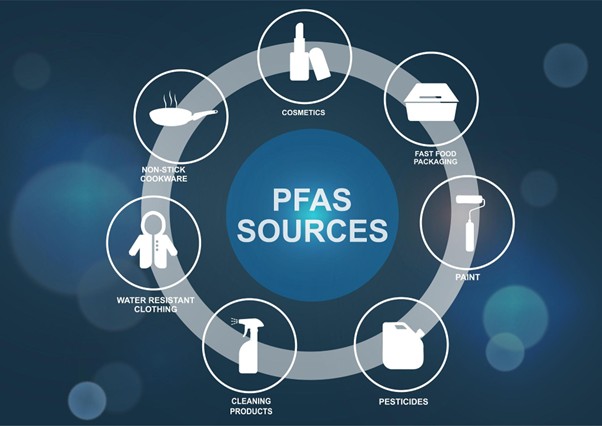
PFAS are synthetic chemicals which accumulate in environmental systems, living organisms, and industrial infrastructure, and they don’t really leave – that’s the core problem. They are known as ‘forever chemicals’ and currently there is a lot of talk about banning them. They are clearly a societal problem that needs to address. However, I do think it’s worth stopping for a moment to consider ‘WHY’ they are the problem that they have become. What is it about PFAS that means they are so prevalent in the products that we make, sell and buy?
They haven’t been used accidentally, as is often the way when it comes to product design, they are used because they work exceptionally well. PFAS delivers a rare bundle of performance properties that are very hard (often impossible) to replicate with other materials – especially at scale and at the current low cost they afford. So what is so great about them?
1. They repel almost everything, PFAS surfaces are:
– Hydrophobic (repel water)
– Oleophobic (repel oils and fats)
– Stain-resistant (liquids don’t wet the surface)
That combination is rare. Many materials repel water or oil but not both.
Commercial applications include…
💡 Food packaging that doesn’t soak through
💡 Textiles that resist rain and grease
💡 Carpets, furniture, outdoor gear that stay “clean-looking” longer
2. They drastically reduce friction:
– Non-stick cookware
– Smooth mechanical movement
– Reduced wear, energy loss, and heat
Positive impacts include…
💡 Better performance
💡 Longer component life
💡 Less maintenance
3. They are extremely stable**, against:
– Heat
– UV light
– Acids, bases, solvents
– Repeated use and washing
Which means…
💡 Products last longer
💡 Performance is predictable
💡 Liability risk is reduced
**This stability is exactly what makes them environmentally persistent — but from a product-design lens, it’s gold.
4. They enable thin, invisible, multifunctional coatings
Which means…
💡 Minimal impact on look, feel, weight
💡 Works across plastics, paper, metals, textiles
💡 Can be used as a ‘quick fix’, so you don’t need to redesign the product.
So, many of the modern conveniences we enjoy are intrinsically tied into the use of these chemicals and removing them, whilst maintaining functionality is a very difficult challenge to solve. Often it will require completely reimagining the way in which the product is delivered. If you are facing challenges to eliminate PFAS and want specialised support to explore alternative options book a FREE no obligation call to get the ball rolling. For more information on the other services that we offer – visit here
Recent Comments